A wardrobe consultation is not a purge, and the goal is not fewer clothes. It is an audit where every garment gets one of three outcomes.
Vaanity · 4 min read
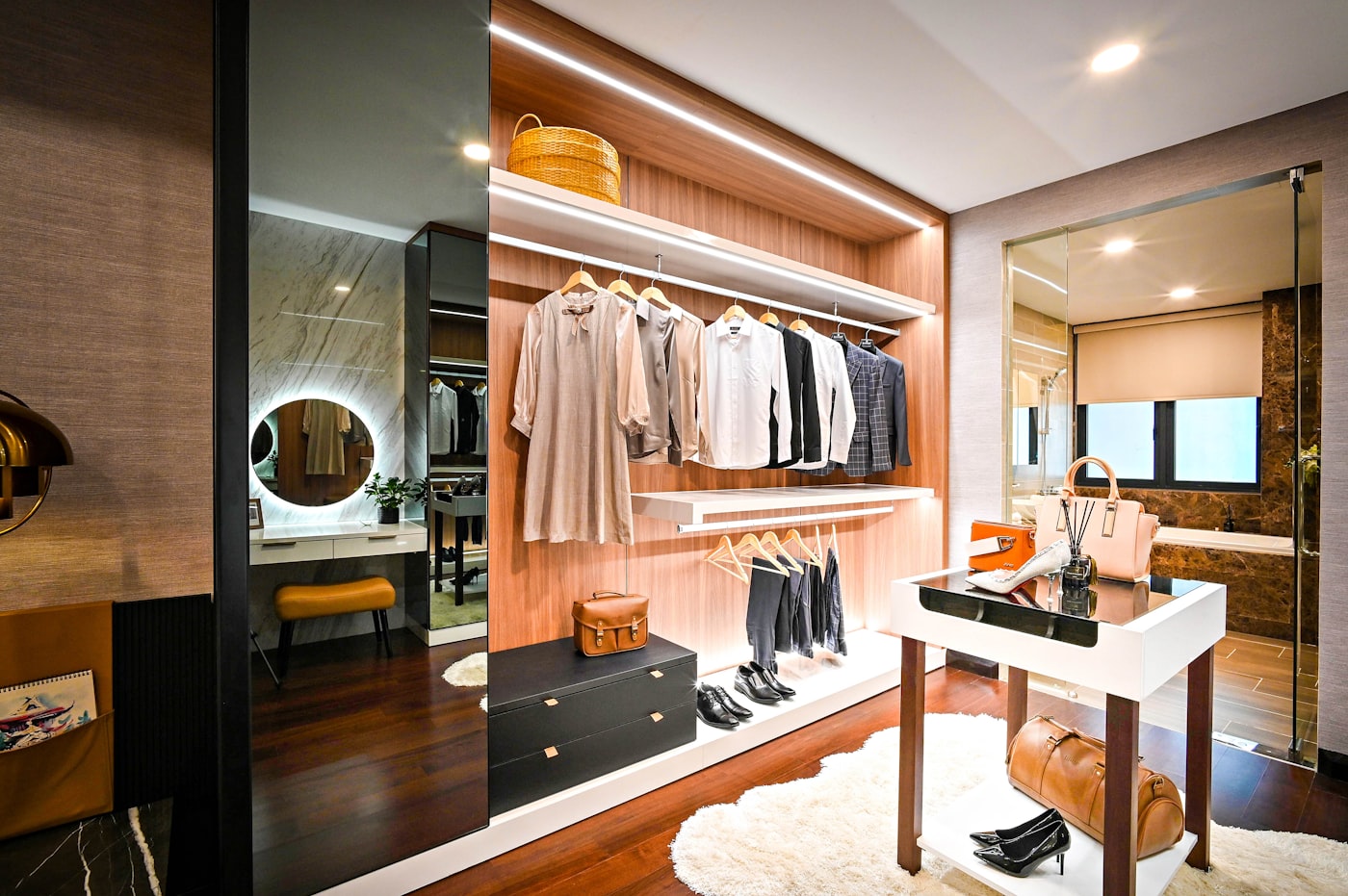
A rail sorted by colour reads faster than one sorted by type — gaps become visible.
Three outcomes, no maybes
Keep, alter, release. The maybe pile is where wardrobes go to die — it is the pile that quietly grows back every year and it is the reason the wardrobe stopped working in the first place. On a video walkthrough your stylist holds you to three.
Release is not the same as discard. Resale, tailoring down, giving it to someone it actually fits — a stylist who has done this a few hundred times knows which route a piece is worth.
What altering actually fixes
Most people underestimate this dramatically. A hem, a shoulder, a waist suppression and a sleeve length between them rescue a startling proportion of a wardrobe, usually for less than the cost of replacing one item.
Most people also over-estimate it in one direction: a shoulder that is too small cannot be fixed, and neither can a fabric that has gone. Knowing which is which before you hand it over is a large part of what you are paying for.
What the audit is looking for is the shape of what is missing.
The gaps only show up once it is sorted
The interesting output of an audit is rarely what leaves. It is the shape of what is missing: eleven tops and one thing to wear under a jacket, or six occasion pieces and nothing for the eight hours a day that are actually work.
Gaps named properly turn into a short, specific shop list — which is a much cheaper document than the vague sense that you need new clothes.
What you leave with
A combination look board built from clothes you already own, so the first outfits cost nothing, plus the alterations list and the gap list in priority order.